
The org chart was a compression artifact
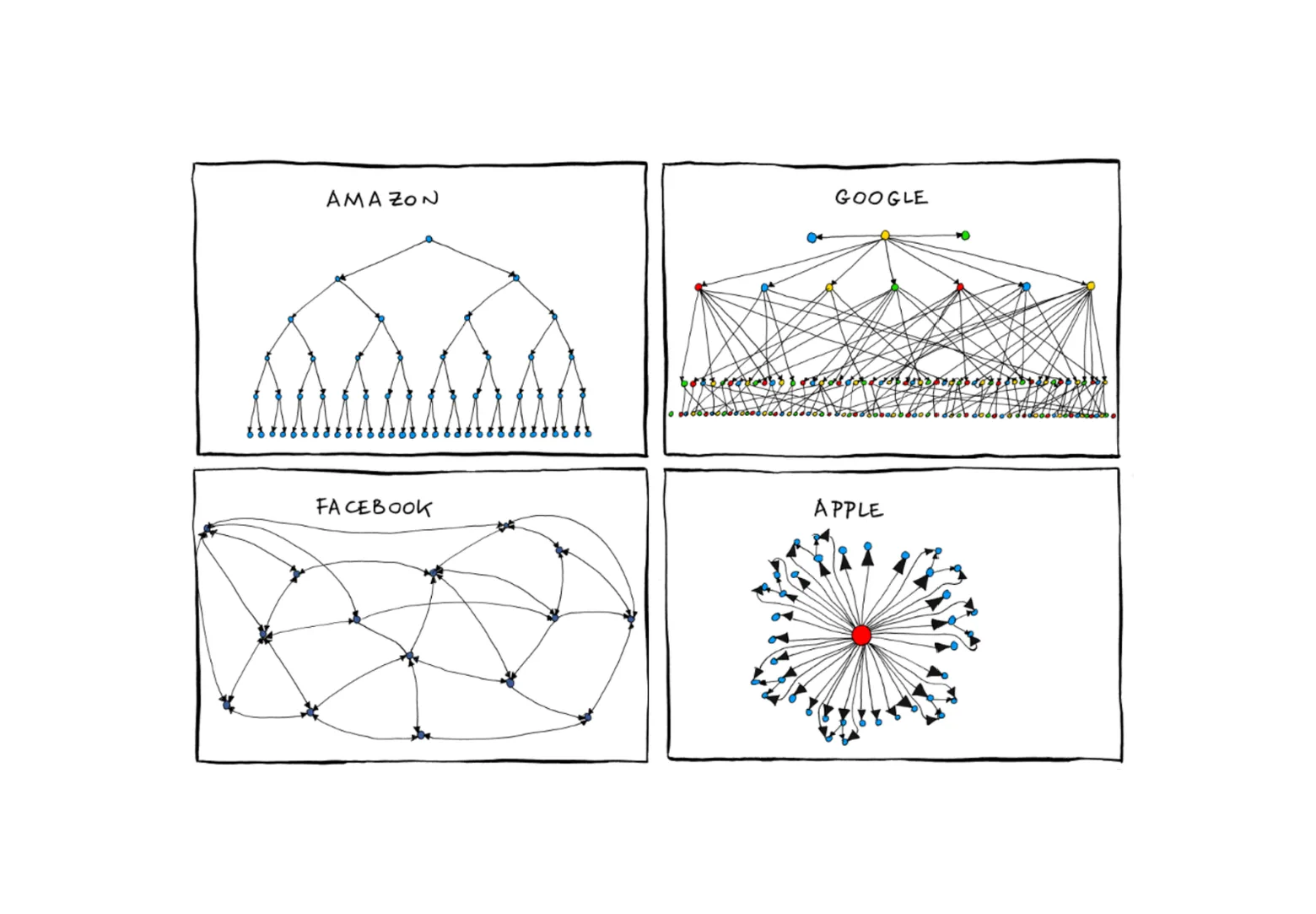
Hierarchies were not some grand theory about how people work best together. They were the cheapest way to move information around a company back when moving information was slow and expensive. That cost is collapsing now, and a lot of org charts are starting to look like the workarounds they always were.
Watch what a manager actually does on a normal Tuesday. They take whatever is happening on the team below them, boil it down into something their own boss can read in ninety seconds, and send it up. Then they take a decision that came from above, unpack it into specific instructions, and send it down. Strip away the job titles and the org chart is really a map of where information gets squeezed and where it gets unpacked. It is a compression scheme drawn as a tree.
For most of business history that was a sensible design. One person can hold maybe seven or eight real working relationships before the effort of staying in sync eats the whole week. So companies grew in layers, and each layer wrote a summary of the layer beneath it. The price was distortion. Every summary throws away detail, and the detail it throws away gets chosen by whoever is holding the pen. By the time the situation on the ground reaches the top floor, it has been recompressed five times over, each pass quietly bent toward whatever the writer wanted to be true.
What the structure was hiding
The useful question is not whether hierarchies are good or bad. It is what they were paying for. The answer turns out to be the same across almost every company: they exist because no single person can see the whole thing at once. You build layers when attention is scarce and context refuses to travel for free.
A summary is a decision about what to leave out, made by someone whose incentives you usually cannot see.
Look at it that way and a lot of familiar dysfunction stops reading as a people problem. The reorg that fixes nothing. The strategy that sounds airtight in the boardroom and falls apart three levels down. The risk that every junior person saw coming months before it reached anyone with the authority to act on it. None of those are failures of character or talent. They are what a high compression ratio looks like once the losses start to bite.
What changes when context gets cheap
The thing that forced the tree into existence is exactly the thing now changing. When holding context across an entire company stops being expensive, the layers whose real job was managing that expense lose their reason to exist. Management does not vanish. The part of management that was, honestly, manual data compression starts to happen some other way.
This does not melt everything into a flat, happy network, and anyone selling you that is selling something. Someone still has to decide. Accountability still has to land on a name. What actually changes is that the decision no longer has to ride in on top of a stack of lossy summaries. The person making the call can work from the unedited picture, and the people doing the work can see how their piece connects to that call without waiting for it to trickle back down in translation.
The companies that take this seriously will not look like flatter versions of the ones we have today. They will be built around some constraint other than the cost of moving information, because that is no longer the thing holding them back. What that constraint turns out to be is still an open question, and it is the one we spend most of our time on.
This is an essay, not a roadmap. We publish the things we are still working out, including the parts we have not settled. If it sparked a thought, we would like to hear it.