
Against the dashboard
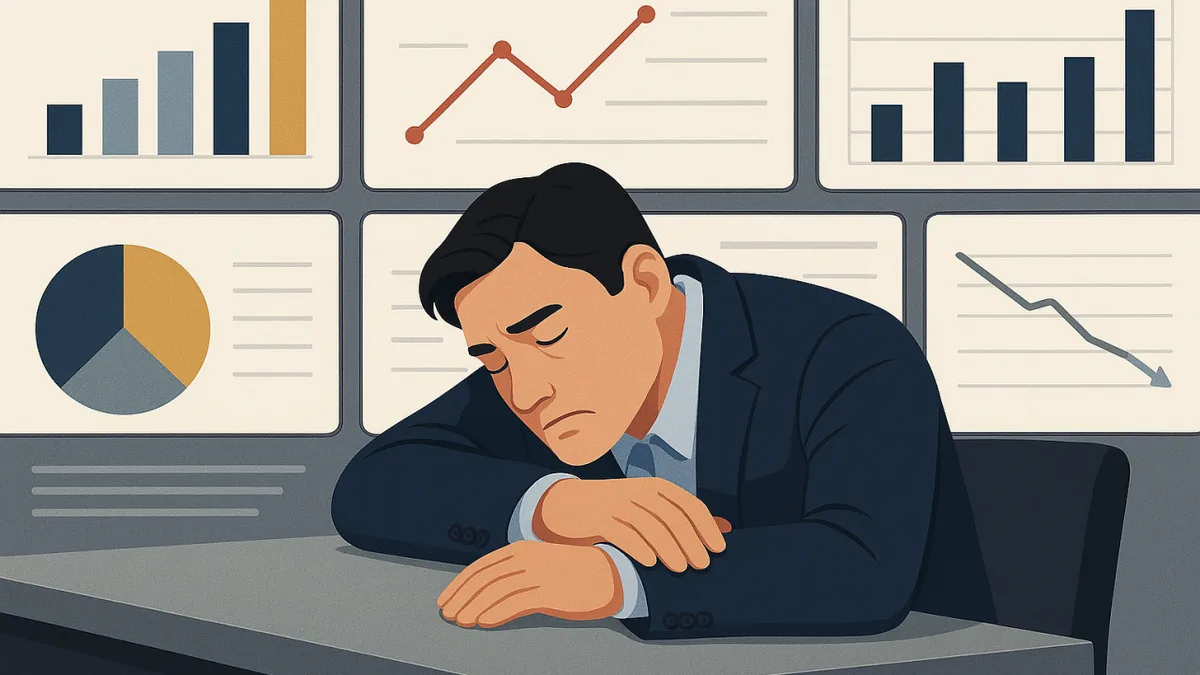
The dashboard was supposed to save you work. Instead it invented a new job: watching the dashboard. A short argument for why looking at something is not the same as knowing it.
A dashboard can only answer questions you already knew to ask. It is a snapshot of someone's past concerns, frozen into charts and left running, waiting for you to come and interpret it. The moment your real question falls outside the frame whoever built it had in mind, the dashboard goes quiet, and you are back to exporting a CSV and working the answer out yourself.
Looking is not knowing
The pitch was visibility. What got delivered was a standing obligation to keep looking, plus a low background hum of worry that the thing that really matters is happening in some chart nobody thought to build. Attention is the one resource you cannot make more of, and a wall of dashboards spends it freely on your behalf.
We would rather a system speak up when something genuinely deserves your attention, in the terms you actually care about, than ask you to keep staring at it on the off chance that it might.